
Choosing the top Clay And Potter manufacturers worldwide requires more than comparing company size or product photographs. Reliable evaluation should consider clay quality, forming precision, firing temperature, factory experience, and consistent delivery. A polished catalog can hide uneven glaze thickness or weak packaging.
This guide examines established manufacturers across major ceramic-producing regions. It considers tableware, architectural ceramics, studio supplies, garden pottery, and custom production. Attention also goes to kiln technology, quality-control procedures, material sourcing, and documented environmental practices. These details matter when a buyer needs matching pieces for a hotel, retail collection, or long-term construction project.
The best manufacturers usually show practical evidence. They can explain their clay body, share sample results, describe firing cycles, and provide clear production timelines. Some specialize in hand-thrown forms, while others rely on high-volume pressing or automated casting. Neither approach is automatically better. The right choice depends on design, budget, quantity, and required consistency.
There are limits.
Public information is not always complete, and factory claims may change over time. Rankings should therefore be treated as informed comparisons, not permanent judgments. Independent samples, factory audits, and direct communication remain valuable before signing a large order. A manufacturer with impressive machinery may still struggle with small custom batches. Conversely, a modest workshop might deliver exceptional craftsmanship but limited capacity.
This overview aims to connect practical buying needs with credible industry signals. It highlights manufacturers that demonstrate expertise, transparency, and dependable production rather than relying only on reputation. Expect useful comparisons, but keep room for careful verification.
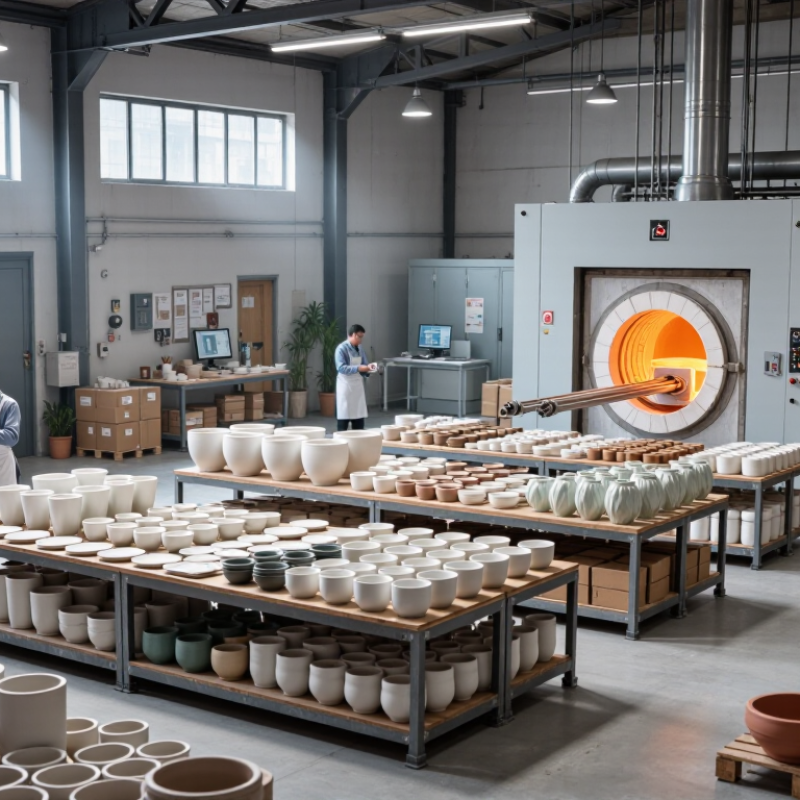
Defining the Global Clay and Pottery Manufacturing Industry
The global clay and pottery manufacturing industry turns mineral-rich earth into functional, decorative, and architectural products. It includes quarries, clay processors, studios, industrial plants, kiln engineers, and distributors. Production may begin with a damp, hand-shaped vessel or a precisely pressed tile. Both depend on moisture control, particle size, forming pressure, drying time, and firing temperature. These variables shape strength, porosity, color, and resistance to thermal shock. Small changes matter.
Manufacturers typically test raw clay before mixing it with water, minerals, or recycled ceramic material. Experienced technicians monitor shrinkage during drying and firing. They also inspect surfaces for cracks, warping, pinholes, and uneven glazing. Reliable facilities record batch numbers, kiln settings, and laboratory results. This traceability supports consistent quality across different production sites. However, global standards are not perfectly uniform. A product accepted in one market may require additional testing elsewhere, especially for food contact, construction use, or outdoor exposure.
Regional geology strongly influences the industry. Fine white clays support detailed tableware, while dense local clays often suit bricks, vessels, and heavy architectural forms. Energy costs, water availability, skilled labor, and environmental controls also affect manufacturing decisions. Digital forming tools improve repeatability, but they cannot replace practical judgment. A model may look accurate while hiding weak drying behavior. The industry still learns through failed firings, uneven batches, and careful review. That imperfection remains part of its technical progress.
| Manufacturing Region | Industry Position | Main Clay Inputs | Typical Manufactured Products | Key Manufacturing Characteristics | Reference Basis |
|---|---|---|---|---|---|
| China | One of the world’s largest ceramic and clay-product manufacturing bases | Ball clay, kaolin, fire clay, feldspathic raw materials | Ceramic tiles, sanitaryware, tableware, bricks and technical ceramics | Large integrated supply chains, high-volume tunnel-kiln production and extensive domestic demand | USGS clay statistics; Ceramic industry statistics |
| India | Major global producer of ceramic tiles, sanitaryware and traditional pottery | Ball clay, china clay, red clay, feldspar-bearing ceramic bodies | Floor and wall tiles, sanitaryware, tableware, bricks and terracotta | Strong concentration of tile manufacturing in western India and a substantial traditional pottery sector | India Brand Equity Foundation industry overview |
| Italy and Spain | Important European centers for design-led ceramic tiles and advanced production technology | Refined clays, kaolin, feldspar and imported mineral additives | Porcelain stoneware, glazed wall tiles, decorated surfaces and specialist architectural ceramics | High automation, digital decoration, large-format pressing and strong export orientation | European ceramic industry data |
| Türkiye | Significant producer and exporter of ceramic tiles, sanitaryware and clay-based building products | Plastic clays, kaolin, feldspar and locally sourced earthenware clays | Ceramic floor tiles, wall tiles, sanitaryware, bricks and roof tiles | Access to regional mineral resources and established links to European, Middle Eastern and North African markets | Turkish ceramic sector information |
| Brazil | Leading Latin American center for ceramic tiles and structural clay products | Red clays, ball clays, kaolin and feldspathic minerals | Ceramic floor and wall tiles, bricks, roof tiles and sanitaryware | Large domestic construction market, regional raw-material supply and established tile-manufacturing clusters | Brazilian ceramic industry information |
| United States | Established producer of industrial clay, bricks, roofing products, sanitaryware and technical ceramics | Common clay and shale, kaolin, bentonite, fire clay and fuller’s earth | Bricks, lightweight aggregate, ceramic tiles, refractories, sanitaryware and processing minerals | Strong mineral classification, industrial processing and demand from construction and advanced-material applications | USGS Mineral Commodity Summaries: Clay |
| Vietnam and Southeast Asia | Growing manufacturing region for tiles, sanitaryware, bricks and traditional pottery | Local red clay, kaolin, ball clay and feldspar-rich ceramic minerals | Ceramic tiles, tableware, sanitaryware, terracotta, bricks and roof tiles | Expanding kiln capacity, competitive labor costs and proximity to Asian construction markets | UNIDO manufacturing statistics |
| Global Raw-Material Supply | The clay and pottery industry depends on geographically distributed mineral deposits | Kaolinite, illite, smectite, chlorite, quartz and feldspar | Plastic forming bodies, porcelain bodies, refractory mixes and ceramic glazes | Mineral chemistry, particle size, plasticity, moisture content and firing behavior determine product performance | USGS clay classification and statistics |
| International Product Standards | Common technical framework for comparing ceramic products across markets | Clay-based ceramic bodies, glazes and fired mineral compositions | Ceramic tiles, sanitary appliances, tableware and construction ceramics | Testing commonly covers water absorption, breaking strength, dimensional tolerance, surface quality and chemical resistance | ISO 13006 ceramic tiles standard |
Note: The table focuses on countries, regions, materials, products and manufacturing characteristics; it intentionally excludes company and brand-level data.
It makes vessels, tiles, bricks, tableware, decorative objects, and architectural products. Production may start with wet clay or pressed material.
Moisture, particle size, forming pressure, drying time, and firing temperature all matter. Small changes can cause cracks or warping.
Technicians examine shrinkage, texture, color, and firing behavior before production. They may mix clay with water, minerals, or recycled ceramic scraps.
Facilities record batch numbers, kiln settings, and laboratory results. These records help explain defects and maintain consistent quality.
No. A product accepted in one market may need extra testing elsewhere. Food contact and outdoor use often require careful verification.
Fine white clays support detailed tableware. Dense local clays may suit bricks, large vessels, and heavy architectural forms.
They improve kiln insulation, recover heat, and use efficient electric equipment for selected processes. Electric kilns are not automatically cleaner everywhere.
Usually, no. Recycled content can change plasticity, color, moisture needs, and firing behavior. Technicians must adjust the formula carefully.
Settling tanks can recover process water, while sensors can detect leaks near mixing and glazing areas. The system may still lose water.
Not necessarily. A lower-carbon kiln does not fix excessive packaging, long transport, or short product lifespans. Independent verification remains important.
The global Clay And Potter manufacturing industry encompasses the production of ceramic tableware, decorative objects, tiles, sanitary products, construction materials, and artistic pottery. Major manufacturing regions are distinguished by their local mineral resources, skilled craftsmanship, technological capabilities, and established trade networks. Manufacturers typically work with materials such as kaolin, feldspar, silica, and various natural clays, transforming them through preparation, shaping, drying, glazing, and high-temperature firing. Quality standards focus on durability, surface finish, dimensional accuracy, safety, and consistent performance across different product categories.
The industry is also evolving through automation, digital design, improved kiln efficiency, and more responsible resource management. Manufacturers are increasingly reducing material waste, recycling water, using energy-saving equipment, and exploring lower-impact firing methods. Future developments are expected to combine traditional craftsmanship with advanced production technologies, enabling greater customization, stronger quality control, and more sustainable manufacturing. Together, these trends are shaping a diverse and innovative global market for clay and pottery products.
