Indoor plants have moved beyond small windowsill accents. A mature fiddle-leaf fig beside a sofa, or a broad monstera near a bright window, needs room to grow and a pot that suits its setting. Large House Plant Pots can provide visual balance, root space, and practical stability. But bigger is not automatically better. Excess soil may stay wet longer, especially when drainage is poor.
The scale of interest is reflected in market research. Grand View Research estimated the global indoor plants market at about $17.93 billion in 2023, with projected annual growth of 4.8% from 2024 to 2030. Its report measures the wider plant market, not pot sales. That distinction matters. The National Gardening Association’s National Gardening Survey also tracks household gardening activity, offering useful context for the growing role of plants at home.
Choosing a large pot still comes down to the plant, the room, and everyday care. Check the root ball, drainage holes, weight, and material before focusing on color or shape. A tall ceramic planter may look elegant, yet it can be awkward to move after watering. A lightweight option may be easier, but less steady beneath a top-heavy plant. Small details count. This guide compares ten options for indoor spaces, with attention to size, style, and practical use. No pot is perfect; the right choice depends on what you can comfortably maintain.
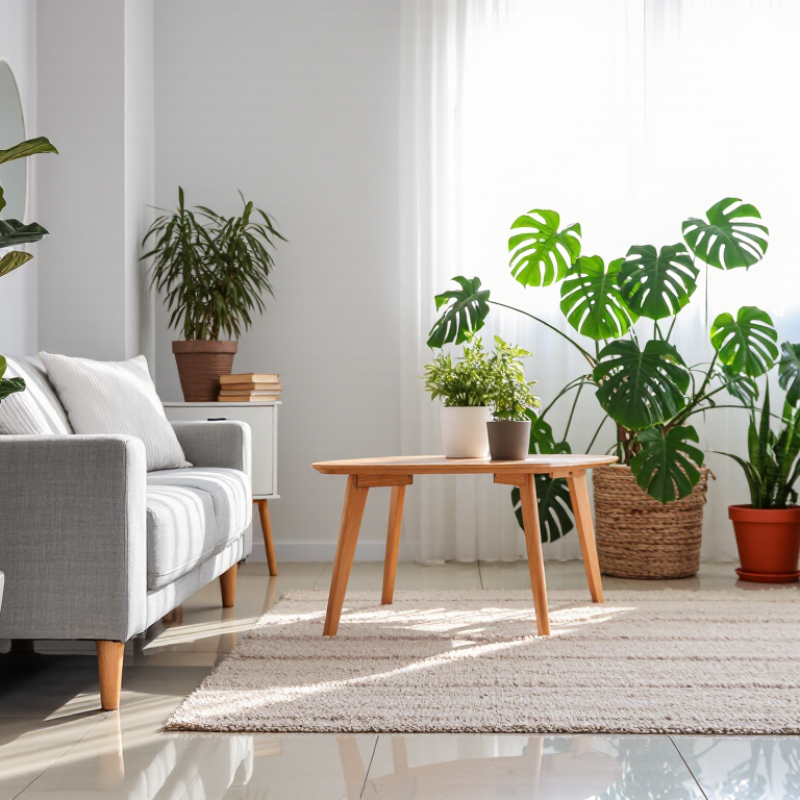
Large Indoor Plant Pots Defined: Capacity, Footprint, and Plant Scale
A large indoor pot is defined by more than its rim diameter. Check its usable capacity in litres, opening width, base footprint, and height. A tall, tapered pot may look generous yet hold less soil than a wider, straight-sided one. Match the root ball with room for new growth, but avoid oversized containers that keep excess mix wet. The footprint matters, too: measure the space near the floor, where the pot actually rests. Leave room for drainage and a saucer. Small detail, big difference.
Plant scale should guide the choice. A broad-leaved plant can visually overwhelm a narrow pot, while a top-heavy specimen needs a stable base. Poorter and colleagues’ 2012 meta-analysis in the Journal of Experimental Botany found that doubling pot volume increased plant biomass by 43% on average; pot size explained 65% of variation in plant size across the studies reviewed. Those figures describe experimental plants, not a guaranteed result for every houseplant. Still, they show why capacity affects growth. Compare the pot with the plant’s mature canopy, not just its current nursery shape. One judgment call remains: a larger pot can improve balance, but it cannot fix poor drainage or unsuitable light.
Top 10 Large House Plant Pots for Indoor Spaces
Large Indoor Plant Pots Defined: Capacity, Footprint, and Plant Scale
Capacity is an approximate geometric estimate using a pot depth of about 75% of its top diameter; tapered walls and drainage space reduce actual usable volume. Suggested plant heights are general scale guides, not strict limits. Check the plant’s root ball and the pot’s internal dimensions before choosing.
Choosing Pot Size: RHS Advises Moving Up by No More Than 5 cm
A tall plant does not automatically need an enormous pot. The RHS advises moving up by no more than 5 cm in diameter when repotting. Measure the existing pot across its opening, then choose one only slightly wider. That small difference gives roots room to grow without surrounding them with excess compost.
Too much spare compost can stay wet for longer, especially in a cool room or a dim corner. Check the root ball before deciding: if roots circle the edges or emerge from drainage holes, repotting may be timely. If the soil is still loose and roots have space, waiting can be kinder. A bigger container is not always an upgrade. It can make watering harder to judge.
For a large indoor plant, stability matters too. Choose a sturdy pot with drainage holes, and use a saucer to catch runoff. If the plant looks top-heavy, a heavier outer pot can help without forcing the roots into a much larger growing pot. I find the size labels less useful than a quick measurement; pots with the same label can have different openings. It is easy to misjudge by eye.
Top 10 Large House Plant Pots for Indoor Spaces — Choosing Pot Size: RHS Advises Moving Up by No More Than 5 cm
| Option |
Approximate Internal Size (Diameter × Height) |
Suitable For |
Practical Features |
| 1 |
30 × 27 cm |
Medium floor plants, such as a young rubber plant or bird of paradise |
A manageable size for a growing plant; check that the root ball fits comfortably. |
| 2 |
35 × 31 cm |
Established plants with a broad root ball, including dracaena or fiddle-leaf fig |
Useful when the current pot is becoming crowded, provided the next pot is only modestly wider. |
| 3 |
40 × 35 cm |
Large foliage plants, such as monstera or a mature peace lily |
Choose a sturdy pot to help support top-heavy foliage; drainage is important. |
| 4 |
45 × 39 cm |
Large indoor plants with a substantial root system |
A broad base can improve stability. Use a saucer or waterproof tray to protect floors. |
| 5 |
50 × 43 cm |
Specimen plants, including large palms or mature rubber plants |
Consider a lightweight material if the pot will need to be moved for cleaning or watering. |
| 6 |
55 × 47 cm |
Very large plants with wide, well-developed root balls |
Check the filled pot’s weight and ensure the floor can support it. |
| 7 |
60 × 51 cm |
Large statement plants in spacious rooms or conservatories |
A nursery pot set inside a decorative outer pot can make watering and repotting easier. |
| 8 |
65 × 55 cm |
Exceptional indoor specimens with a root ball that genuinely needs this capacity |
Use only when the plant’s roots justify the size; excess compost can stay wet for too long. |
| 9 |
70 × 59 cm |
Very large, mature house plants with extensive roots |
Check access through doorways and plan how the plant will be watered and moved. |
| 10 |
75 × 63 cm |
Oversized specimen plants where the existing root ball fills a pot of this scale |
Best suited to plants that need the extra room; a large container alone is not a reason to repot. |
Choosing the size: These dimensions are indicative; pot shapes and measurements vary. Measure the root ball and choose a container around 2–5 cm wider, rather than moving to a much larger pot. The Royal Horticultural Society (RHS) advises increasing pot size by no more than about 5 cm when repotting. Select a pot with drainage holes, or use a removable nursery pot inside a decorative cover pot.
Top 10 Large Houseplant Pots Ranked by Drainage, Stability, and Cost
This ranking weighs drainage, stability, and purchase cost—not appearance alone. The 2024 National Gardening Survey estimates that 80% of U.S. households gardened in 2023, a reminder that practical container choices matter in many homes. The strongest all-rounder is a wide-base resin pot with drainage holes: affordable, light to move, and less likely to tip than a tall, narrow design. Next come terracotta, glazed ceramic, and fiberstone. They offer sturdy bases, but large versions can be costly or awkward to lift. Drainage still matters. The Royal Horticultural Society recommends containers with drainage holes; a decorative outer pot can hide a plain, draining inner pot.
For lower-cost picks, consider recycled-plastic pots, simple nursery pots inside stable cachepots, and lined wooden planters. Check that the inner pot drains freely. Metal containers can work with a removable liner, though standing water may damage roots. Concrete pots are very stable, but their weight makes repositioning difficult. Self-watering designs suit consistent watering routines, yet they cost more and need occasional cleaning. Tall, narrow pots rank last for large plants: they save floor space but can wobble as foliage grows. That trade-off is easy to underestimate. The ranking is a practical comparison, not a controlled product test; prices and stability vary with pot size, plant weight, and flooring. A heavy fiddle-leaf fig on a slick tile floor needs a broader base than a small indoor palm.
Placement and Care: Match Watering to Pot Volume and Check Drainage
A large pot changes more than a room’s look; it affects how long the root zone stays wet. A wide ceramic container can hold damp mix for days, especially in a cool corner with little airflow. Check moisture several inches down with a finger or wooden stick instead of watering by calendar. After watering, note the pot’s weight. It is surprisingly useful.
Match watering to the plant, pot, and season. A plant in bright light may use water quickly, while a small root system in an oversized pot can sit in wet soil for days. Water slowly until a little drains from the holes, then empty the saucer. Do not let the pot stand in runoff. Not every week.
Before placing a heavy planter, check that its drainage holes are open and set it on a stable, waterproof tray. If a decorative outer pot has no holes, keep the plant in a draining inner pot and remove it for watering. Gravel at the bottom will not replace drainage holes. I have sometimes misjudged a pot by its dry surface. The center was still damp. Check again after a few days and adjust your routine instead of adding water automatically.
Conclusion
Large House Plant Pots give indoor greenery room to grow while adding structure and visual balance to a space. Choosing the right pot means considering its capacity, footprint, and the mature size of the plant—not just its appearance. A useful sizing guideline is to move up by no more than 5 cm when repotting, helping avoid excess soil that stays wet for too long. Ceramic, fiberglass, plastic, and terracotta each offer different trade-offs in weight, durability, moisture retention, and cost.
When comparing large pots, prioritize effective drainage and a stable base, especially for tall or top-heavy plants. The best choice depends on the plant, its location, and how often you can provide care. Match watering to the larger volume of soil, check that drainage holes remain clear, and use a suitable saucer or protective layer indoors. With thoughtful selection and placement, a large pot can support healthy roots and complement an indoor space without making routine care difficult.