
How to Choose the Best Concrete Planters?

Time:2026-09-29 Author:Sienna
0%

Choosing the right Concrete Planters involves more than matching a color to your garden. Size, drainage, weight, texture, and placement all affect long-term performance. A planter that looks elegant beside a glass entrance may feel oversized on a narrow balcony. Its thick walls can also protect roots from sudden temperature changes, yet they make moving difficult.

Start with the plant’s mature size and watering needs. Measure the available space, then allow room for air circulation and maintenance. Look for a drainage hole, a stable base, and a surface without serious cracks. Experienced landscapers often recommend checking the planter’s interior depth, because shallow containers can restrict root growth. Quality concrete should feel solid and consistent, not unusually brittle or crumbly.

Placement matters greatly.

Outdoor exposure adds another layer of judgment. Freeze-thaw cycles, intense sunlight, and standing water can gradually damage poorly finished products. Ask manufacturers about curing methods, sealants, drainage design, and expected weather resistance. Reliable sellers should provide clear dimensions and honest weight information. Their advice should match the planter’s actual construction.

A small mistake is easy to overlook. It may become expensive later.

This guide examines practical selection criteria, including style, durability, plant compatibility, and installation safety. It also considers an uncomfortable truth: the heaviest planter is not always the best planter. Personal experience, professional recommendations, and careful product inspection should work together before you buy. That balanced approach helps create a planting space that remains attractive, stable, and genuinely useful over time.
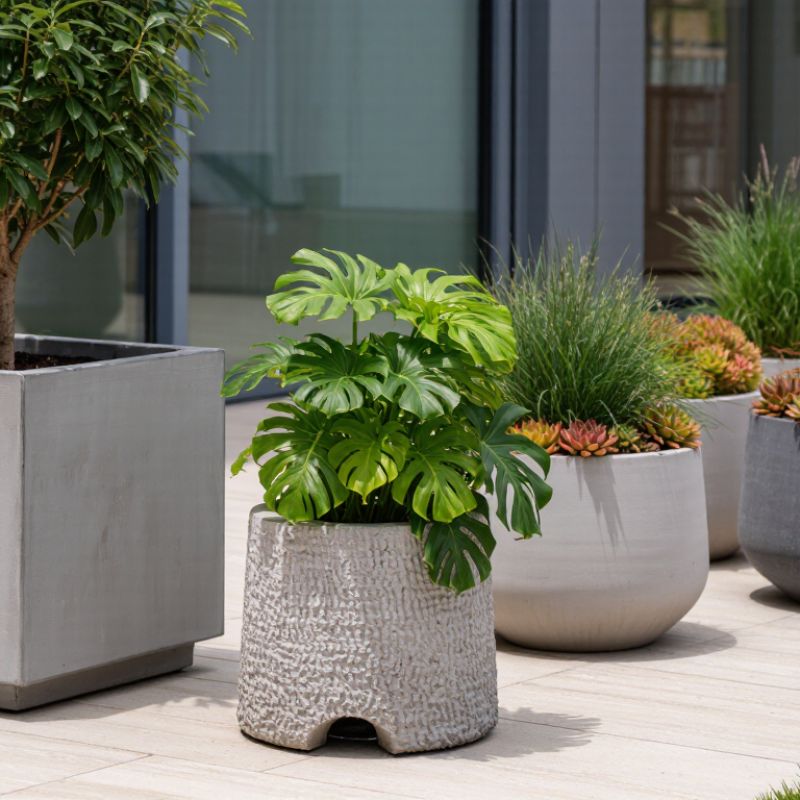
How to Choose the Best Concrete Planters?

Understanding Concrete Planter Types and Their Main Uses

How to Choose the Best Concrete Planters?

Concrete planters are not one uniform product. Cast, precast, fiber-reinforced, and lightweight concrete serve different spaces. Cast concrete offers thick walls and strong visual weight for plazas or driveways. Precast units provide consistent dimensions for repeated streetscape layouts. Fiber-reinforced concrete can reduce cracking and handling problems, although quality varies between manufacturers. Lightweight concrete works better on terraces, balconies, and rooftop gardens. Check the building’s structural load first. A beautiful planter becomes a serious mistake when the slab cannot support wet soil.

Use also determines the right shape and drainage design. Tall, narrow planters suit entrances and pedestrian routes, while wide bowls support shrubs and small trees. Drainage holes, raised feet, and an internal liner help prevent stagnant water. I have seen planters fail because water remained trapped after heavy rain. The UN-Habitat World Cities Report 2022 notes that cities consume about 75% of global resources, making durable, repairable landscape products increasingly important. Concrete can last for decades, but poor drainage shortens that life sharply.

Scale matters in dense urban areas. UN DESA’s World Urbanization Prospects projects that 68% of people will live in cities by 2050. This increases demand for greenery in compact public spaces. Choose rounded edges near busy walkways, and textured finishes where wet surfaces could become slippery. Consider the planter’s empty weight, soil volume, tree-root growth, and lifting access. My own preference is not always the safest one; oversized planters look impressive, but they can restrict maintenance and movement.

Assessing Size, Shape, Weight, and Drainage Requirements

How to Choose the Best Concrete Planters?

Choosing a concrete planter begins with the plant’s mature size, not its current appearance. A small herb needs less root space than a shrub or young tree. Measure the root ball, then allow extra room for healthy growth. A planter about 5–10 centimeters wider than the root ball is usually practical. I once chose a shallow container for an attractive shape. The plant soon became crowded. That mistake taught me to value root depth over appearance.

Shape affects stability, maintenance, and placement. Tall, narrow planters suit entrances, but they may tip in strong wind. Wide, low designs work better on exposed patios. Weight matters too. Wet soil makes concrete planters significantly heavier. Check the surface before placing one on a balcony or raised deck. Use a furniture pad if necessary, but confirm it can support the load. This detail is easy to overlook.

Tips: Look for generous drainage holes, especially for plants that dislike wet roots. Place a mesh screen over each hole to reduce soil loss. Keep the planter slightly raised so water can escape freely. In cold regions, standing water may freeze and create internal pressure. A frost-resistant design helps, although no material is completely risk-free. Leave a small gap below the rim for watering. Test the drainage before planting. Five minutes of checking can prevent weeks of frustration.

Choosing Concrete Quality, Finish, Color, and Design

Choosing a concrete planter begins with the material itself. Quality concrete should feel dense, stable, and evenly formed. Inspect the rim, corners, and inner walls for deep cracks or exposed aggregate. Small surface pores are normal, but large voids may allow water to enter. A proper drainage hole matters more than a perfect appearance. I once chose a planter with beautiful lines but poor drainage. The roots suffered after heavy rain.

The finish changes both maintenance and character. A smooth surface looks refined, while a textured finish hides dust and minor marks. Check whether the planter has a suitable protective treatment, especially for outdoor use. Sealers can reduce water absorption, but they cannot repair weak concrete. Look closely. Feel the surface. Color also affects its surroundings. Warm gray suits brick and timber, while pale concrete brightens shaded corners. Dark tones can look dramatic, yet they may show mineral stains more clearly.

Design should match the plant, location, and available space. A tall planter can frame an entrance, but a wide bowl may better support shallow-rooted plants. Leave enough room for mature roots, not only the plant’s current size. Consider the weight before placing it on balconies, raised decks, or polished floors. Design trends can be tempting, but practical proportions usually age better. Do not rush. My own preference has changed after seeing how quickly an oversized planter dominated a small patio. Good selection is partly technical and partly honest observation.

Matching Planters to Plants, Locations, and Climate Conditions

Choosing the best concrete planter starts with the plant, not the shape. Check mature root depth, spread, and drainage needs before measuring the container. A shallow herb may tolerate a compact planter, while a small tree needs substantial soil volume and anchorage. Fresh concrete can also increase growing-medium alkalinity, which may stress acid-loving plants. Use a tested liner or allow the planter to weather. Drainage matters.

Location changes the decision. The U.S. Environmental Protection Agency reports that urban areas may be 1–7°F warmer during the day than nearby rural areas. Dark paving, reflected heat, and south-facing walls can intensify this effect. Select heat-tolerant plants for exposed patios, then choose thick-walled planters that reduce rapid temperature swings. In shaded courtyards, moisture retention becomes more important. Do not rely on appearance alone.

Climate zones provide useful guidance, but they are not perfect predictions. The 2023 USDA Plant Hardiness Zone Map uses average annual extreme minimum temperatures in 10°F zones. Wind, rainfall, humidity, and winter wetness still matter. In cold regions, elevate containers slightly and avoid trapped water that can freeze and expand. Weight matters on balconies; confirm the structure’s permitted load with a qualified professional. I would rather choose a smaller planter with reliable drainage than a dramatic container that stays saturated. That choice is less impressive, but often more successful.

How to Choose the Best Concrete Planters?

Matching planter depth to plant root systems helps improve drainage, root stability, and moisture control. In hot or windy locations, choose the deeper end of each range; in cold or wet climates, prioritize drainage holes and avoid waterlogged soil.

The ranges show typical minimum soil depths for container-grown plants: shallow-rooted herbs and annual flowers generally need about 20–30 cm, vegetables such as tomatoes need about 30–45 cm, and shrubs commonly need about 45–60 cm. Concrete planters are heavy and stable, making them suitable for exposed patios and windy locations, but drainage and freeze–thaw protection remain essential.

Comparing Maintenance Needs, Safety, and Overall Value

How to Choose the Best Concrete Planters?

Comparing Maintenance Needs, Safety, and Overall Value

Concrete planters can last for years, but their weight and porosity affect everyday care. Look for drainage holes and a level base. Without drainage, water can collect around roots and stain nearby paving. In cold climates, trapped moisture may worsen cracking during freeze-thaw cycles.

A breathable sealant can reduce water absorption, though it may need reapplication. Check the care instructions before sealing; not every finish suits every planter. Small details matter.

Safety deserves equal attention. A large planter filled with wet soil is much heavier than it looks. Place it where the surface can support the load, and avoid narrow ledges or wobbly stands. Rounded or smooth edges can reduce scrapes in busy walkways.

Don’t assume a balcony can carry the weight; ask a qualified building professional if capacity is unclear. For value, compare the purchase price with expected upkeep, delivery, and the difficulty of moving it later.

Concrete is durable, but “buy once” is not always realistic: finishes age, and moving a full planter can be awkward. Decide where it will live before you fill it.

FAQS

What type of concrete planter suits a balcony or rooftop garden?

Lightweight concrete usually works better. Check the slab’s weight limit before adding wet soil, plants, and water.

How should I choose a planter’s size?

Choose according to the plant’s mature root system. Measure the root ball. Allow roughly 5–10 centimeters of extra width for growth.

Which planter shape is best for windy locations?

Wide, low planters generally provide better stability. Tall, narrow designs may tip during strong winds. I once preferred a tall shape and underestimated the wind.

Why is drainage so important?

Drainage prevents stagnant water and unhealthy roots. Use generous holes, raised feet, and a small gap below the rim. Test water flow before planting.

How can I reduce soil loss through drainage holes?

Place a mesh screen over each hole. It allows water out while holding most soil inside. Do not block the opening completely.

What should I inspect when checking concrete quality?

Look at the rim, corners, and inner walls. Avoid deep cracks, exposed aggregate, and large surface voids. Small pores are usually acceptable.

Which finish and color work best outdoors?

Textured finishes can hide dust and minor marks. Warm gray suits brick and timber. Pale concrete brightens shaded areas, while dark colors show mineral stains more clearly.

How can I protect a concrete planter in cold weather?

Choose a frost-resistant design and prevent standing water. Freezing water can create internal pressure and damage the planter. No material is completely risk-free.

Can large concrete planters improve a small patio?

They can, but oversized units may restrict movement and maintenance. Check empty weight, soil volume, lifting access, and mature root growth. Impressive is not always practical.

Conclusion

Choosing the best Concrete Planters begins with understanding the different types available and how they will be used, whether to frame an entrance, decorate a patio, or support a garden. Consider the planter’s size and shape in relation to the plants and available space. Its weight matters too, especially if it may need to be moved, while suitable drainage helps prevent excess water from harming plant roots.

Look for durable concrete and a finish, color, and design that suit the surrounding space. Match each planter to the plant’s growth needs and account for its location and local climate, since exposure to sun, rain, and temperature changes can affect performance. Finally, compare maintenance requirements, stability, safety, and overall value. A well-chosen planter balances practical needs with appearance, providing a dependable home for plants without creating unnecessary upkeep.

Sienna

Sienna

Sienna is a skilled marketing professional with a deep expertise in our company’s core products and services. With a passion for innovation and detail, she plays a pivotal role in crafting insightful blog posts that not only highlight the unique features of our offerings but also provide valuable......