
Hanging Planters are becoming a practical design choice for homes, offices, balconies, and hospitality spaces. They use vertical surfaces instead of valuable floor area. This matters in compact apartments, where every clear walkway improves comfort and safety. Grand View Research identifies indoor plants as part of a growing global houseplant market, supported by wellness, decoration, and urban-living trends. The report also shows that consumers increasingly value plants as lifestyle products, not simple ornaments. That shift deserves careful attention.
The U.S. Environmental Protection Agency reports that indoor pollutant levels can be two to five times higher than outdoor levels. However, potted plants should not replace ventilation, filtration, or moisture control. Their strongest value often comes from visual comfort and better spatial planning. Royal Horticultural Society research also links regular gardening with improved wellbeing, although hanging displays are not a universal solution. Some plants need frequent trimming. Others fail in dim rooms. Installation mistakes can also damage ceilings or create dripping water.
Experienced growers usually begin with light, load capacity, drainage, and watering access. A trailing pothos can soften a bright shelf. A fern can create texture near filtered daylight. Outdoor Hanging Planters can frame a porch while keeping herbs within reach. The result feels lighter and more intentional. Sometimes, it is imperfect. A beautiful arrangement may still need adjustment after one season. Choosing the right container, bracket, and plant therefore matters more than following a temporary trend. Good design combines appearance, horticultural knowledge, and responsible maintenance.
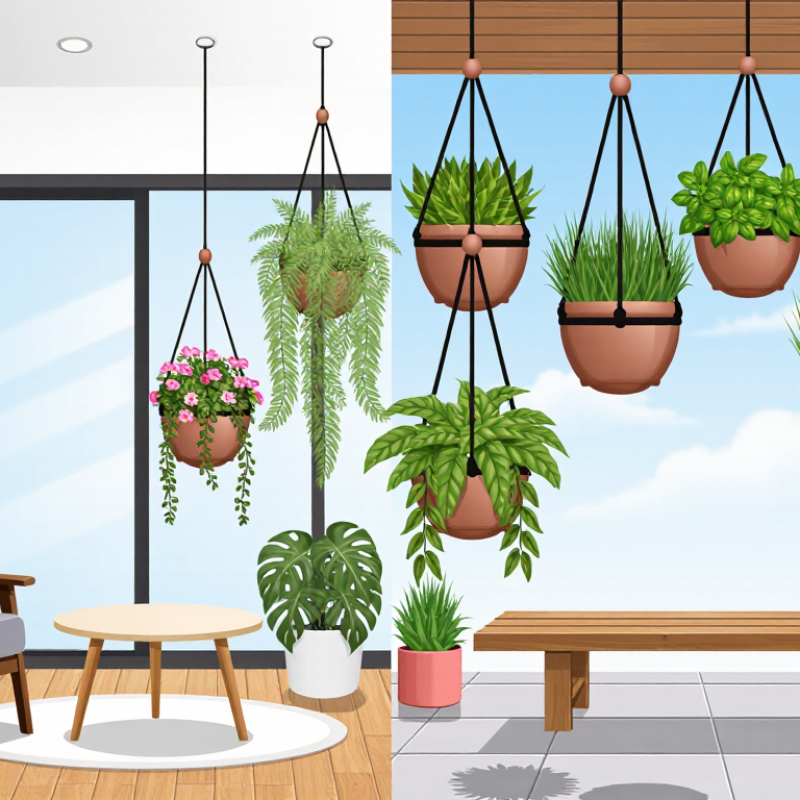
Hanging planters are containers suspended above the floor or ground. They usually hang from cords, chains, brackets, or ceiling hooks. A drainage hole lets excess water escape. The plant stays elevated while its roots grow in potting mix.
Simple, but not foolproof. Wet soil can become surprisingly heavy. Choose a hanger rated above the planter’s fully watered weight. Check the mounting surface before installation, especially in older ceilings or masonry.
They work through gravity, support, drainage, and regular care. Water moves downward through the soil, so the roots receive moisture while excess water leaves through the bottom. Indoors, use a drip tray or lined container to protect floors and furniture.
Outdoors, allow space for wind movement. A secure hook matters more on a balcony than in a calm room. Strong airflow can also dry the soil faster than expected.
I once placed a hanging planter too close to a sunny window. The leaves looked healthy for several days, then curled at the edges. Moving it slightly back and checking the soil by touch helped.
This small mistake showed me that placement is part of the system. Leave enough room for growing stems, air circulation, and safe watering. Inspect cords, hooks, and knots regularly.
They can weaken quietly, especially outdoors. Some plants may need more frequent watering, while others prefer a brief drying period between waterings.
In compact homes and crowded patios, hanging planters turn overlooked airspace into growing space. This matters as cities become denser. The United Nations projects that 68% of the world’s population will live in urban areas by 2050. A ceiling hook, balcony rail, or wall bracket can add greenery without taking valuable floor area.
Placement requires more than decoration. I have found that lightweight pots work best near bright windows, while trailing plants can soften empty corners without blocking walkways. Outdoor planters should hang high enough to protect heads, yet low enough for watering. The U.S. Environmental Protection Agency reports that indoor pollutant levels can be two to five times higher than outdoor levels, but plants should not replace ventilation or filtration. NASA’s Clean Air Study showed pollutant removal in controlled conditions, not ordinary rooms. The difference matters.
Use drip trays indoors. Always. Choose weather-resistant supports outside, especially where wind is common. A 2024 National Gardening Association report indicates continued consumer interest in gardening, but interest does not guarantee easy maintenance. Hanging baskets dry faster than floor pots, and I sometimes underestimate that speed. Checking soil moisture twice weekly is safer than following a rigid schedule. Grouping plants by light and water needs also reduces waste, though perfect combinations are rare. Some spaces need fewer plants, not more.
The best hanging-planter plants match light, airflow, and watering habits. Indoors, pothos, spider plants, heartleaf philodendrons, and hoyas tolerate bright, indirect light. They also handle brief drying better than delicate ferns. A south-facing window needs a sheer curtain. Otherwise, leaves may scorch.
NASA’s Clean Air Study found that several houseplants absorbed volatile organic compounds in sealed chambers. However, the study did not prove that plants clean normal homes effectively. The U.S. Environmental Protection Agency reports that indoor pollutant levels can reach two to five times outdoor levels. Ventilation still matters more. Plants add living texture, not a replacement for fresh air.
Outdoors, trailing petunias, nasturtiums, ivy geraniums, thyme, and oregano perform well when their light needs match the site. Use a lightweight pot with drainage holes. A small hanging basket dries quickly in hot weather. Check the soil with one finger before watering. I have seen baskets fail from kindness: daily watering left roots sitting in stagnant moisture. That mistake is easy to repeat. Weak stems also need protection from strong wind, especially on balconies above ground level. Herbage growth can become uneven when the basket receives light from only one side. Rotate it weekly, if practical.
Hanging planters turn unused vertical space into living décor. They work well beside a bright kitchen window, above a small balcony, or near a desk. They also reclaim the floor. That matters in compact homes.
Their benefits extend beyond appearance. The Royal Horticultural Society’s wellbeing research found that regular gardening was associated with wellbeing scores about 6.2 points higher and stress scores 4.2 points lower. Hanging plants can support this routine through simple tasks, such as pruning trailing stems or checking dry soil. They also soften hard surfaces and create visual separation without permanent walls. However, plant placement requires care. A dark corner may weaken growth, while a heavy pot can become a safety risk. I have also overwatered hanging plants before; drainage is easy to underestimate. Hanging planters are not magic air filters. The U.S. Environmental Protection Agency reports that indoor pollutant levels can be two to five times higher than outdoor levels. Ventilation and source control remain more reliable.
Tips: Choose lightweight containers with secure hooks and drip protection. Match each plant with its light needs. Test the mounting point before watering. Leave clear space below, especially above seating or walkways. A weekly inspection helps catch dry soil, pests, and loose fittings early. Small detail, big effect.
| Benefit or data dimension | Indoor spaces | Outdoor spaces | Practical considerations |
|---|---|---|---|
| Space efficiency | Uses vertical space, helping keep floors, shelves, and window ledges clear. | Adds planting capacity to balconies, porches, patios, and small gardens without taking additional ground area. | Measure the available height and clearance before installation, especially near doors, walkways, and ceiling fans. |
| Light management | Makes it easier to position plants near bright windows while keeping them away from busy surfaces. | Can place plants at different heights to capture sunlight or provide partial shade beneath an overhang. | Match the plant to its light requirement; direct afternoon sun can increase heat and water loss. |
| Suitable plant types | Trailing houseplants such as pothos, spider plants, heartleaf philodendrons, and some ferns are commonly suitable. | Trailing annuals, herbs, ornamental grasses, and sun- or shade-tolerant flowering plants can work well when matched to local conditions. | Select plants according to light, temperature, wind, humidity, and the planter’s drainage capacity. |
| Drainage and plant health | A planter with drainage helps reduce the risk of waterlogged soil and root-related problems. | Drainage helps remove excess rainwater, particularly during wet periods. | Use a saucer or drip tray indoors and protect walls, floors, and furniture from runoff. |
| Watering needs | Indoor plants generally dry more slowly than plants exposed to sun and wind outdoors. | Outdoor planters may need more frequent monitoring during hot, dry, or windy weather. | Check soil moisture before watering rather than following a fixed schedule; containers dry at different rates. |
| Mobility and flexibility | Can be repositioned to improve access to light or protect plants from heating and cooling drafts. | Some hanging systems can be moved seasonally or relocated during severe weather. | Move only after checking the total weight of the planter, moist growing medium, plant, and support hardware. |
| Visual impact | Adds height, texture, and greenery to rooms without requiring additional furniture. | Creates vertical layers that can soften balconies, entrances, fences, and outdoor seating areas. | Group plants by similar care requirements for a consistent appearance and easier maintenance. |
| Pest and animal access | Elevated placement can reduce contact with pets and children, although it does not make plants inaccessible. | Raising plants may reduce disturbance from some ground-level pests and animals. | Confirm plant safety before placing species within reach of children or pets. |
| Durability requirements | Indoor materials mainly need to resist moisture from watering and everyday handling. | Outdoor materials must withstand sunlight, rain, temperature changes, and wind exposure. | Use corrosion-resistant hardware outdoors and inspect ropes, chains, hooks, and mounting points regularly. |
| Installation safety | Requires a secure ceiling, wall, or overhead structure capable of supporting the loaded planter. | Must account for wind movement, vibration, rain-soaked soil, and nearby people or property. | Follow the hardware instructions, locate suitable structural support, and avoid hanging planters above seating or fragile objects. |
| Best overall use case | Apartments, kitchens, home offices, sunrooms, and other areas where floor space is limited. | Balconies, porches, patios, courtyards, and compact gardens that benefit from vertical planting. | Choose hanging planters when vertical space, visual layering, and flexible placement are more valuable than easy ground-level access. |
Note: Plant performance varies with species, container size, growing medium, light exposure, climate, and watering practices. Always verify the safe working load of the selected support system.
Choosing a hanging planter begins with the plant, not the container. Observe the space for a full day. Bright windows may provide strong afternoon sun, while shaded patios need low-light plants. Measure the ceiling height and leave enough room for watering. A planter that hangs too low becomes an everyday obstacle. I have made that mistake.
Check the planter’s weight when filled with wet soil. Use a ceiling joist, wall stud, or approved anchor suited to the surface. Never rely on a weak hook or decorative fixture. For outdoor installation, allow room for wind movement, and keep the planter away from doors. Drainage holes are essential. Place a saucer indoors, but avoid trapped water around the roots. Test the hanging height before adding the plant.
Use lightweight, well-draining soil to reduce strain. Water slowly until excess moisture appears. Empty indoor saucers after several minutes. Wipe dusty leaves with a damp cloth. Inspect cords, chains, hooks, and ceiling points every few weeks. Look for rust, stretching, cracks, or loose fittings. Replace damaged parts promptly. Plants also need regular pruning, although I sometimes prune too late and create uneven growth. Rotate the planter occasionally so each side receives similar light. Check for pests beneath leaves, especially in warm indoor corners.
It is a plant container suspended above the floor or ground. Cords, chains, brackets, or ceiling hooks usually support it. A drainage hole releases excess water.
Gravity pulls water downward through the potting mix. Roots receive moisture, while extra water exits below. The hanger supports the container and plant together.
Check the ceiling, wall, hook, cords, and knots before hanging the planter. Choose support rated above the planter’s fully watered weight. Wet soil becomes surprisingly heavy.
Choose a location matching the plant’s light needs. Leave space for stems, airflow, and watering. Keep it away from seating, walkways, and delicate furniture.
Use a drip tray or lined container beneath the planter. Let excess water drain before returning it to its position. Not always perfect, but helpful.
Some plants dry faster because airflow reaches their containers. Check the soil by touch before watering. Avoid watering automatically every day.
They use vertical space and preserve valuable floor area. They can soften hard surfaces and create visual separation without permanent walls. Small detail, big effect.
Plants may make a room feel more comfortable, but they are not reliable air-cleaning systems. Ventilation and reducing pollution sources remain more dependable.
Allow space for wind movement and inspect the fittings regularly. Outdoor cords, hooks, and knots can weaken quietly. I once underestimated this risk.
Hanging Planters are practical containers suspended from ceilings, walls, railings, or sturdy outdoor structures, allowing plants to grow without taking up valuable floor or surface space. They are especially useful in small rooms, balconies, patios, porches, and gardens where vertical space is available. By arranging several planters at different heights, you can create a layered display, improve visual interest, and make unused areas more attractive.
Many plants thrive in Hanging Planters, including trailing flowers, herbs, compact foliage plants, and drought-tolerant varieties, provided their light, water, and drainage needs are met. These planters can improve indoor atmosphere, add privacy outdoors, and make plant care more organized. When choosing one, consider its size, weight, material, drainage, and hanging location. Install it with secure hardware, check that the support can handle the total weight, and maintain it through regular watering, pruning, cleaning, and occasional repositioning to provide suitable light.
